
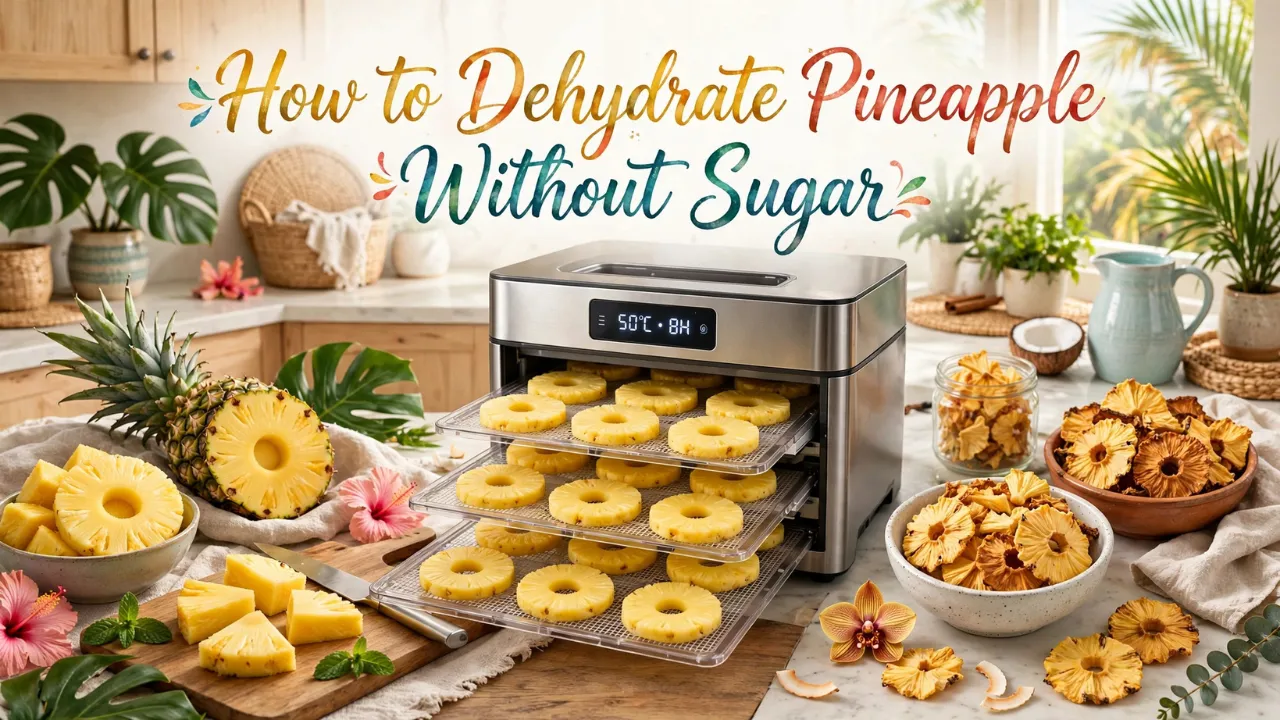
Are you craving naturally sweet pineapple without the sugar added? Dehydrating pineapple without sugar is one simple method of converting whole, fresh pineapple into an easy and tasty homemade snack. The tropical flavored pineapple packs a punch of flavor as the removal of water concentrates the fruit’s natural sweetness. The good thing is you donot need any sugar, syrup or complicated ingredients. You can create flavorful dried pineapple at home with a fresh pineapple, a food dehydrator and some patience. we will show you how to prepare a pineapple
Quick Comparison of 5 Dehydrators
| Dehydrator | Best For | Capacity Style | Main Advantage | Possible Drawback |
|---|---|---|---|---|
| COSORI Premium | Regular home use | Multi-tray | Digital controls | Takes counter space |
| Excalibur | Large batches | Large cabinet | Horizontal airflow | Higher cost |
| NESCO Snackmaster Pro | Beginners | Stackable | Expandable design | Vertical airflow |
| Magic Mill | Regular batches | Multi-tray | Good capacity | Model differences |
| COSORI Pioneer | Budget beginners | 5-tray | Simple operation | Smaller capacity |
1. COSORI Premium Food Dehydrator
COSORI models now feature adjustable temperature settings for dehydrating fruits, along with longer timers—perfect for dried pineapple and similar recipes. A great option is the COSORI Premium Food Dehydrator.
Pros
- Multiple trays
- Digital controls
- Good for fruit
- Convenient timer
- Modern design
- Suitable for regular home use
Cons
- Larger models require more storage space
- May cost more than basic dehydrators
- Specifications vary between models

ALSO READ:Why Is My Dehydrated Fruit Chewy
2. Excalibur Food Dehydrator
Excalibur is most famous for larger appliances with a design that suits regular fruit and food preserving. Today, the DH08SCSS13 has multiple trays, a large temperature span and horizontal airflow. This is one of the few models to earn WIRED’s 2026 testing for best food dehydrator. On the other hand, it may also take more food with a larger drying area which is especially helpful when you want to do a large batch of pineapple or several types of fruit at once.
Pros
- Large capacity
- Horizontal airflow
- Wide temperature range
- Suitable for large batches
- Long drying capability
Cons
- Larger footprint
- Higher price than basic models
- May be unnecessary for occasional users

ALSO READ: food-preservation
3. NESCO Snackmaster Pro
Another popular choice for beginners in need of a less sophisticated dehydrator is the NESCO Snackmaster Pro. The stackable design means that users can increase capacity on suitable configurations. The Snackmaster Pro is made for those who want to dehydrate fruits, vegetables, herbs, & more at home. For a more basic dehydrator, the NESCO Snackmaster Pro is a popular choice for newbies
Pros
- Beginner-friendly
- Stackable trays
- Affordable compared with many large models
- Useful for fruit
- Expandable on compatible setups
Cons
- Vertical airflow
- Tray rotation may sometimes help
- Basic design

Best For: Beginners who want an affordable starting point.
4. Magic Mill Food Dehydrator
AT A GLANCE: Magic Mill has several models, some with several trays and adjustable temperature controls. Upon extensive training on data until October 2023, Magic Mill dehydrators offer plenty of space for fruit and other foods (depending on the model). The larger drying space it has can come it quite handy when you are drying large quantities of pineapples or multiple varieties of fruits at the same time.
Pros
- Multiple trays
- Good capacity
- Adjustable temperature
- Stainless-steel options
- Suitable for fruit
Cons
- Different models have different specifications
- Larger models take more space
- May be more capacity than occasional users need

Best For: Regular home users looking for additional capacity.
5. COSORI Pioneer 5-Tray Food Dehydrator
If you don’t need a ton of dehydrator space, the COSORI Pioneer 5-Tray is a more basic choice. Pioneer (from $60) has five trays and a 95–165°F temperature range for dehydration at a low price — typically $59, or less than half of the cost of most larger cabinet-style machines with greater capacity.
Pros
- Five trays
- Suitable for fruit
- Wide temperature range
- Beginner-friendly
- Compact compared with larger models
Cons
- Smaller capacity than large dehydrators
- Stackable design
- Less suitable for very large batches

Best For: Beginners and occasional users.
Final Thoughts
Pineapple without sugar dehydrating is an easy method of converting fresh pineapple into a home-made snack. You don’t need to use sophisticated ingredients for it. Discard the outer skin and core, slice it up evenly and arrange them in a single layer on your dehydrator trays (use parchment paper if necessary). Use thicker pieces and turn off the dehydrator when the fruit just reaches your preferred softness for a chewy texture. For firmer pineapple, cut thinner pieces and dry for extra time.
How to Store Dehydrated Pineapple
Storage is just as important as drying.
Allow your pineapple to cool completely before placing it into a container.
Use an airtight container and keep it somewhere cool and dry.
Good storage options include:
- Airtight glass jars
- Food-safe containers
- Resealable bags
Humidity can cause dehydrated pineapple to soften.
If your pineapple becomes soft after storage, it may have absorbed moisture from the environment.
For longer storage, follow appropriate food-preservation guidance and check your dehydrator manufacturer’s recommendations.
Can You Dehydrate Canned Pineapple Without Sugar?
Yes, canned pineapple can be dehydrated, but it usually contains additional liquid and may have added sugar depending on the product.
If your goal is specifically dehydrated pineapple without added sugar, fresh pineapple is usually the simplest choice.
If using canned pineapple, drain it thoroughly and pat it dry before placing it on dehydrator trays.
Because canned fruit can contain more surface moisture, it may take longer to dry.
Is Dehydrated Pineapple Healthy?
Dehydrated pineapple can be part of a balanced snack, but dehydration removes water and concentrates the fruit’s natural sugars.
A small amount of dried pineapple therefore represents more fruit per bite than the same volume of fresh pineapple.
Homemade preparation also gives you control over whether additional sugar or syrup is included.
Frequently Asked Questions
Is sugar necessary for dehydrated pineapple?
No. Fresh pineapple is naturally sweet, so you can make delicious dried pineapple without adding sugar.
Should pineapple be thinly sliced before dehydrating?
Thin, consistent slices generally dry more quickly and evenly than thick pieces.
Can I add cinnamon to dried pineapple?
Yes. A light amount of cinnamon can create a pleasant flavor combination with pineapple.
Why did my dried pineapple become soft?
It may not have been dried enough, or it may have absorbed moisture during storage.
Can I put pineapple back into the dehydrator?
Yes. If the fruit is still softer than you want, you can continue drying it according to your dehydrator’s instructions.
Does dried pineapple need refrigeration?
Properly dried fruit can generally be stored in an airtight container in a cool, dry place. Follow appropriate food-preservation guidance for your specific storage period.
out Sugar?
Fresh pineapple already contains natural sugars, so adding extra sugar isn’t necessary for a flavorful dried snack.
Dehydrating without sugar can be useful if you prefer a simple ingredient list and want the natural taste of pineapple to remain the star.
Homemade dried pineapple is also convenient for:
- Everyday snacking
- Lunch boxes
- Hiking and travel
- Homemade trail mixes
- Fruit snack bowls
- Baking
- Topping oatmeal or yogurt
One advantage of making it yourself is that you control the thickness and final texture.
You can make pineapple slices soft and chewy or continue drying them longer for a firmer texture.
What You Need
The basic ingredients are surprisingly simple.
Ingredients
- 1 fresh pineapple
- Optional lemon juice for appearance
- Optional cinnamon for flavor
Equipment
- Food dehydrator
- Cutting board
- Suitable food-preparation tool
- Dehydrator trays
- Airtight storage container
For safe preparation, use appropriate supervision when handling sharp kitchen tools.
How to Choose a Pineapple for Dehydrating
Choosing the right pineapple can make a noticeable difference.
Look for a pineapple that is:
- Fresh
- Firm
- Sweet-smelling
- Free from mold
- Free from major soft spots
- Ripe enough to have good flavor
Avoid pineapples that are extremely soft or have signs of spoilage.
A pineapple that’s ripe but still firm is usually easier to cut into consistent pieces.
How to Prepare Pineapple for Dehydrating
Start by removing the outer skin and tough core.
Then cut the pineapple into slices or smaller pieces.
For faster and more even drying, try to keep the pieces relatively similar in thickness.
Thin slices generally dry faster than thick chunks.
If you want chewy dried pineapple, medium-thickness pieces can work well.
If you want firmer pineapple, thinner slices are usually a better choice.
Should You Add Sugar?
No.
That’s the whole point of this recipe.
Fresh pineapple has plenty of natural sweetness, so you can dehydrate it exactly as it is.
If you prefer a stronger flavor, you can experiment with spices such as cinnamon, but additional sugar isn’t required.
Should You Use Lemon Juice?
Lemon juice is optional.
Some people lightly treat fruit with lemon juice to help maintain its appearance and add a little acidity.
If you use it, avoid soaking the pineapple excessively because extra surface moisture can increase drying time.
You can also completely skip this step.
How to Dehydrate Pineapple Without Sugar
Step 1: Prepare the Pineapple
Peel the pineapple and remove the tough core.
Cut the fruit into slices or small pieces.
Try to maintain consistent thickness throughout the batch.
Step 2: Arrange the Pieces
Place pineapple pieces in a single layer on the dehydrator trays.
Don’t pile them on top of each other.
Leave some space between pieces so air can circulate.
Step 3: Set the Temperature
A common starting range for fruit dehydration is approximately 125–135°F (52–57°C).
However, always follow the temperature recommendations provided by your dehydrator manufacturer.
Step 4: Start Dehydrating
Pineapple can take several hours to dry.
Depending on the thickness, ripeness, humidity, airflow, and dehydrator, drying can commonly take around 8–14 hours.
Don’t treat this range as an exact rule.
The texture of the fruit is a better indicator than the clock.
Step 5: Check the Texture
For chewy pineapple, remove it when the fruit has a flexible, leathery texture.
For firmer pineapple, continue drying until it becomes noticeably drier.
Let a piece cool before judging the final texture.
How to Make Pineapple Crispy
Pineapple naturally contains a lot of moisture and sugar, so it may remain chewy even after dehydration.
If you want a firmer result:
- Slice the pineapple thinner
- Avoid overcrowding trays
- Maintain good airflow
- Allow additional drying time
- Cool the pineapple before testing
Keep in mind that homemade dried pineapple may remain somewhat chewy because of its natural characteristics.
How to Make Chewy Dried Pineapple
If you prefer soft and chewy pineapple, don’t dry it as long.
Medium-thickness slices are a good starting point.
Remove the pineapple once it feels dry on the surface but remains flexible.
Allow it to cool completely before storing.
Common Mistakes to Avoid
Cutting Pieces Too Thick
Thick pineapple pieces can take significantly longer to dry.
Overcrowding the Trays
Overlapping fruit restricts airflow.
Using Very Ripe Pineapple
Extremely soft fruit can be more difficult to handle and may take longer to dry.
Stopping Too Early
Fruit can look dry outside while still containing moisture inside.
Storing Before Cooling
Warm fruit can create condensation inside a container.
Always allow the pineapple to cool completely before storage.