
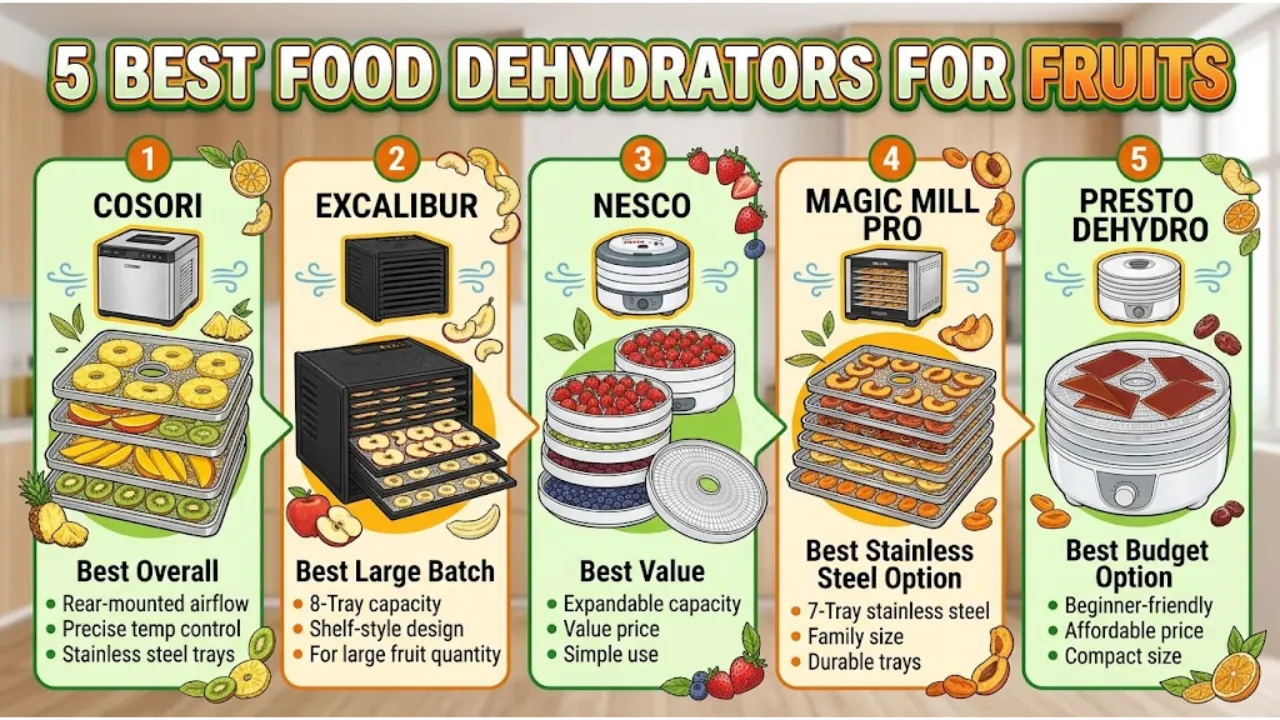
While fresh Fruits can be good, it does not last very long before rotting. The fruit food dehydrator is a simple mechanism to dry apples, bananas, strawberries, mangoes, pineapple, peaches, grapes and other fruits by gradually taking the moisture out of them. Dehydration, on the other hand, uses low heat and air movement — not like baking or frying. It helps to condense the natural flavour and turns them into snacks which can be stored for later. It can also be very handy for making fruit leather, dried berries, apple chips and granola bar or trail mix components.
Food Dehydrator for Fruits Comparison
| Food Dehydrator | Best For | Tray Capacity | Main Advantage | Potential Drawback |
|---|---|---|---|---|
| COSORI 6-Tray Stainless Steel | Overall use | 6 | Stainless steel trays and convenient controls | Moderate capacity |
| Excalibur Select Digital | Large batches | 8 | Large drying capacity | Higher cost and larger footprint |
| NESCO FD-75A Snackmaster Pro | Value | Expandable | Expandable tray system | Vertical airflow |
| Magic Mill Pro | Stainless steel users | 7 | Good capacity and durable trays | Takes more storage space |
| Presto 06300 Dehydro | Beginners/Budget | Multiple trays | Affordable and simple | Less capacity than premium models |
1. COSORI Food Dehydrator, 6 Stainless Steel Trays – Best Overall
If you want to dry fruit at home with a simple machine, the COSORI Food Dehydrator, 6 Stainless Steel Trays is Tier 1 great; It has 6 stainless steel trays that offer plenty of space for all those fruit slices, veggies, herbs and snacks like fruit leather. The convenience of directly selecting the temp and time is great for beginners, as well because it’s digital and all.
Why We Like It
For someone searching for a best food dehydrator for fruits, COSORI offers a good balance of capacity, controls, convenience, and durability.
Pros
- Six stainless steel trays
- Good option for fruit, vegetables, and herbs
- Digital controls are easy to use
- Convenient for regular home dehydration
- Stainless steel construction is durable
- Suitable for beginners
Cons
- Six trays may not be enough for very large harvests
- Takes up countertop space
- Premium features can cost more than basic dehydrators

Also read:5 Best Food Dehydrators for Beef Jerky: Easy Picks for Homemade Jerky
2. Excalibur Select Digital Food Dehydrator, 8-Tray – Best for Large Batches
Actually, in case your heart is set on drying tons of produce, the Excalibur Select Digital Food Dehydrator, 8-Tray earns a significant consideration. The Excalibur has always been a large capacity food dehydrator and its shelf style design is perfect for those occasions when you find yourself with lots of foods to process. An eight-tray unit gives you way more room than a compact countertop dehydrator. So, this will be handy when doing an extra large batch for dehydrating apples, strawberries, mangoes, bananas or tomatoes torsor fruit leather.
Why We Like It
The biggest advantage is capacity. If you regularly purchase fruit in bulk or preserve garden produce, an eight-tray machine can make the process much more efficient.
Pros
- Large eight-tray capacity
- Excellent for large fruit batches
- Digital controls
- Suitable for fruit leather and sliced fruit
- Useful for vegetables, herbs, and jerky
- Good choice for frequent dehydrating
Cons
- Larger countertop footprint
- Generally more expensive than entry-level models
- May be more machine than occasional users need

Also read:Dehydrating Tomatoes & Make Tomato Powder
3. NESCO FD-75A Snackmaster Pro Food Dehydrator – Best Value
The NESCO FD-75A Snackmaster Pro Food Dehydrator is a familiar face for shoppers wanting practical dehydration power without moving into premium pricing territory. What makes it particularly interesting is that the stackable design means that its capacity can be increased by simply adding more trays. It also allows users to start smaller and scale up at a later time. NESCO for bananas, apples, strawberries,mangoes, pineapple, peaches and any other fruit. The circular trays which with it are versatile for both daily dehydration and storage.
Why We Like It
The expandable tray system is the main attraction. You don’t necessarily need to buy a very large dehydrator on day one.
Pros
- Good value
- Expandable tray capacity
- Suitable for fruits and vegetables
- Simple controls
- Compact compared with some large horizontal models
- Long-running, well-known product line
Cons
- Circular trays can provide less usable surface than square trays
- Vertical airflow may require attention for even drying
- Basic controls compared with premium digital models
- Large batches can take more organization

4. Magic Mill Pro Food Dehydrator, 7-Tray – Best Stainless Steel Option
The Magic Mill Pro Food Dehydrator, 7-Tray is an strong mid-tier option for shoppers seeking large capacity and stainless steel construction. The large seven trays offer more drying real estate than many compact models, making it ideal for families or those who frequently preserve fruit. For apple slices, banana chips, strawberries, mangoes, pineapple, fruit leather, vegetables and herbs — Really anything you want to make at home.
Why We Like It
This model is a good choice if you want something between a basic budget dehydrator and a larger premium machine.
Pros
- Seven-tray capacity
- Stainless steel trays
- Suitable for fruit and vegetables
- Good choice for frequent home use
- Useful capacity for families
- Versatile for different foods
Cons
- Larger than compact dehydrators
- May cost more than basic plastic-tray models
- Requires sufficient storage space

5. Presto 06300 Dehydro Electric Food Dehydrator – Best Budget Option
If you want to start small and at not too greater an expense, the Presto 06300 Dehydro Electric Food Dehydrator is a good option. This comes in extremely handy if you are looking to start testing the dried fruit waters before committing to a full size premium dehydrator. It is for fruits, vegetables, herbs, homemade snacks, and other low moisture foods. This relatively simple design makes it accessible to novice dehydraters.
Why We Like It
Its biggest advantage is accessibility. If you’re not sure how frequently you’ll use a dehydrator, the Presto provides a relatively simple way to start.
Pros
- Budget-friendly
- Beginner-friendly design
- Useful for fruit and vegetables
- Compact compared with large-capacity models
- Good entry-level choice
- Digital versions provide convenient controls
Cons
- Smaller capacity than large Excalibur models
- Circular trays may limit usable surface
- Not ideal for very large fruit batches
- Vertical airflow can require tray management

Final Verdict
Fruits — When it comes to choosing the best dehydrator for fruits, all depending on capacity, budget (light or heavy), airflow, controls and usage frequency. So best overall is the COSORI Food Dehydrator, 6 Stainless Steel Trays because it has a great mix of usability, size, and all stainless steel construction! Beginners looking for a budget-friendly entry point should go with the Presto 06300 Dehydro.
Which Is the Best Food Dehydrator for Fruits?
The right choice depends on how you plan to use your machine.
For most home users, the COSORI Food Dehydrator, 6 Stainless Steel Trays is an excellent overall option. It offers a practical combination of capacity, stainless steel trays, convenient controls, and versatility.
If you regularly dehydrate large quantities of fruit, the Excalibur Select Digital 8-Tray makes more sense. Its larger capacity can reduce the number of separate batches you need to run.
For shoppers who want good value and expandable capacity, the NESCO FD-75A Snackmaster Pro is worth considering.
The Magic Mill Pro 7-Tray is a strong option for users who specifically prefer stainless steel and want a generous middle-range capacity.
Finally, if you’re new to dehydration and want to keep your initial investment lower, the Presto 06300 is an approachable choice.
Best Fruits to Dehydrate
One of the best things about owning a fruit dehydrator machine is the variety of foods you can prepare.
Apples
Apples are among the easiest fruits to dehydrate. Slice them thinly and evenly for crispy or chewy apple chips.
Bananas
Bananas can become sweet and chewy when dehydrated. They make an easy homemade snack and are useful for trail mixes.
Strawberries
Thinly sliced strawberries produce flavorful dried fruit. Because strawberries contain significant moisture, patience is important during dehydration.
Mangoes
Dried mango is popular because dehydration concentrates the fruit’s natural sweetness. Choose ripe but firm mangoes and cut them into relatively even pieces.
Pineapple
Pineapple works very well in a dehydrator and can create a sweet, chewy snack.
Peaches
Peaches can be sliced and dried for snacks, baking, or adding to homemade trail mixes.
Grapes
Grapes can be dehydrated into raisin-like snacks. Smaller fruits may require longer drying times depending on their size and moisture content.
How to Dehydrate Fruit in a Food Dehydrator
Start by washing your fruit thoroughly. Remove stems, seeds, pits, and any damaged areas.
Cut the fruit into evenly sized pieces. Consistent thickness is important because thinner pieces generally dry faster than thick pieces.
Arrange the fruit in a single layer on the dehydrator trays. Avoid stacking pieces on top of one another because this can restrict airflow.
Select an appropriate temperature according to your dehydrator’s instructions and the type of fruit you are preparing. Fruit commonly requires a moderate drying temperature rather than the highest setting.
Check the fruit toward the end of the expected drying period. The finished texture depends on the fruit and your preference. Some people prefer chewy dried fruit, while others prefer crisp fruit chips.
After drying, allow the fruit to cool before storing it. Properly dried fruit should be stored in clean, airtight containers in a cool, dry location.
Tips for Getting Better Results
For the best results from your best food dehydrator for fruits, keep the following tips in mind.
Cut pieces evenly: Different thicknesses can cause some pieces to finish much earlier than others.
Don’t overcrowd trays: Leave enough space around pieces for air to circulate.
Use ripe fruit: Fruit that is flavorful and ripe generally produces better-tasting dried snacks.
Rotate trays when appropriate: Some vertical-airflow machines may produce more consistent results when trays are rotated during the process.
Don’t rush the drying process: Fruit contains a lot of moisture. Drying too quickly at an excessively high temperature can affect texture.
Cool before storage: Allow dried fruit to cool completely before putting it into airtight containers.
Check for remaining moisture: If pieces are still noticeably wet inside, continue drying before long-term storage.
Is a Food Dehydrator Worth It for Fruits?
Yes, especially if you regularly buy fruit in bulk, grow your own produce, or enjoy homemade snacks.
A food dehydrator for fruits can help reduce food waste and gives you control over ingredients. You can prepare snacks without relying on added preservatives or excessive sugar.
It is also more versatile than its name suggests. The same appliance can often be used for vegetables, herbs, fruit leather, mushrooms, and other foods.
For occasional use, a budget model such as the Presto may be enough. For frequent preservation, investing in a larger or more feature-rich model can save time.
Frequently Asked Questions
What is the best food dehydrator for fruits?
The COSORI Food Dehydrator with six stainless steel trays is an excellent overall choice for home fruit dehydration. It offers useful capacity, convenient controls, and durable stainless steel trays.
What fruits can you put in a food dehydrator?
You can dehydrate many fruits, including apples, bananas, strawberries, mangoes, pineapple, peaches, grapes, pears, cherries, and other fruits. Preparation and drying time vary depending on moisture content and slice thickness.
How long does fruit take in a dehydrator?
Drying time varies considerably. Thin apple slices may finish sooner than thick mango or pineapple pieces. Moisture content, slice thickness, dehydrator design, temperature, and humidity all affect drying time. Always check the fruit periodically rather than relying only on a fixed time.
What temperature should I use to dehydrate fruit?
Fruit is generally dehydrated at moderate temperatures. Follow the temperature recommendations in your specific dehydrator’s manual because settings can vary between models.
Is dehydrated fruit healthy?
Dehydrated fruit can be a convenient snack and retains many of the nutrients found in the original fruit, although removing water concentrates the natural sugars and calories by weight. Portion size is therefore important.
Can I make fruit leather in a food dehydrator?
Yes. Many dehydrators can make fruit leather when used with appropriate nonstick sheets or fruit-leather trays. Spread blended fruit evenly and follow the manufacturer’s instructions.
Do you need to rotate trays when dehydrating fruit?
It depends on the dehydrator. Some vertical-airflow models can benefit from tray rotation, while horizontal-airflow designs are generally intended to distribute air more evenly across trays.
Is it cheaper to dehydrate fruit at home?
It can be, particularly when you purchase seasonal fruit at a lower price or have excess fruit from a garden. A dehydrator also lets you control the ingredients and prepare snacks according to your preferred texture.
Can I dehydrate frozen fruit?
Some frozen fruits can be dehydrated after appropriate preparation, although fresh fruit is generally easier to work with. Frozen fruit may release additional moisture during the process, so drying can take longer.
What is the best dehydrator for large amounts of fruit?
A larger model such as the Excalibur Select Digital 8-Tray is a strong choice when capacity is your priority. Larger tray areas allow you to process more fruit in one cycle.
What Is a Food Dehydrator for Fruits?
A food dehydrator is a kitchen appliance designed to remove moisture from food using warm air and controlled airflow. When used for fruit, it gradually reduces water content while helping Fruits preserve the fruit’s flavor and texture.
A fruit dehydrator machine is especially useful when you have a large quantity of seasonal fruit. Instead of allowing extra apples, mangoes, bananas, or strawberries to spoil, you can turn them into snacks that are easier to store.
The best models provide adjustable temperature Fruits controls and sufficient airflow so fruit dries more evenly. Horizontal airflow models can be particularly convenient because air is distributed across the trays rather than simply moving vertically through a stack.
What to Look for in the Best Food Dehydrator for Fruits
Before buying a food dehydrator for fruit, consider how often you plan to use it and how much fruit you want to dry at one time.
Tray Capacity
If you occasionally make apple chips or banana slices, a smaller dehydrator may be enough. For families, gardeners, or anyone who buys fruit in bulk, a larger model can save time by allowing more food to dry in one cycle.
Temperature Control
Different fruits require different drying conditions. Adjustable temperature control gives you more flexibility when preparing apples, berries, mangoes, pineapple, fruit leather, and other foods.
Airflow
Airflow is one of the most important features. Horizontal airflow designs can provide more consistent drying across multiple trays, while vertical models can be affordable and compact.
Tray Material
Stainless steel trays are durable and easy to clean. Plastic trays can also work well, especially on budget-friendly machines.
Timer
A built-in timer is useful because fruit dehydration can Fruits take several hours. Automatic shutoff means you don’t necessarily need to monitor the machine throughout the entire process.