
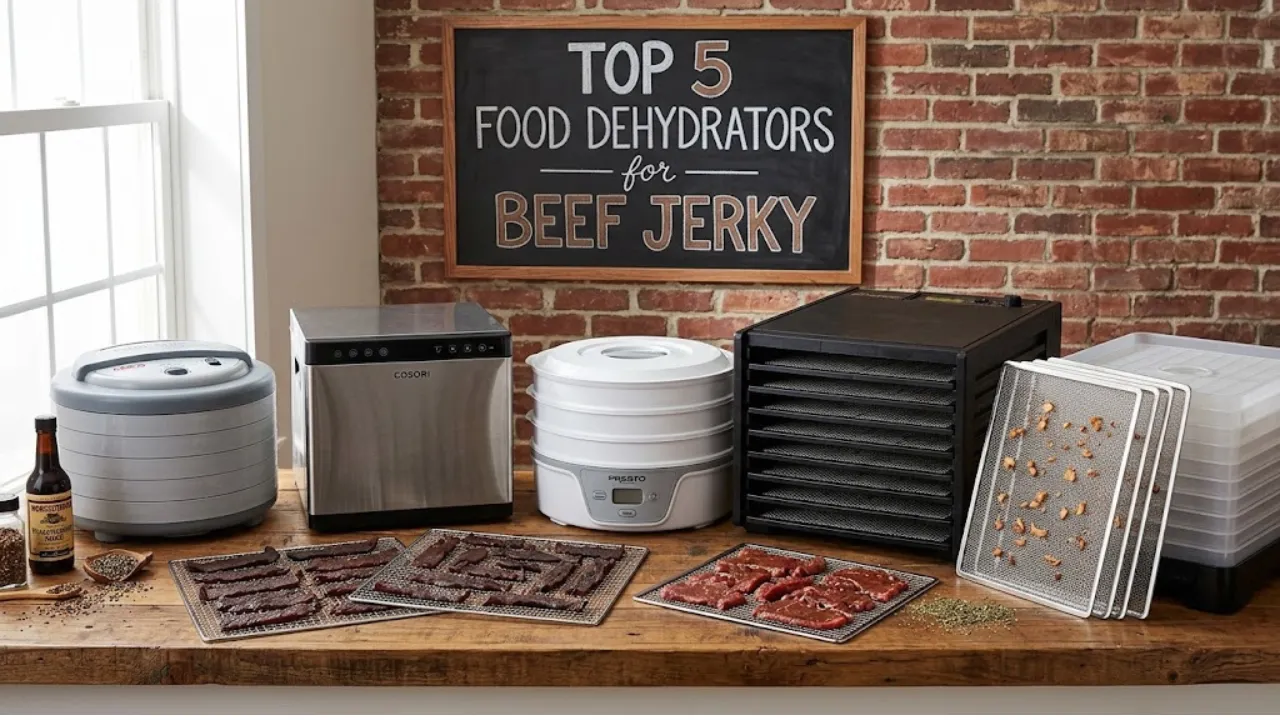
Finding the right dehydrator makes homemade beef jerky a cinch! A good machine will provide more consistent airflow, adjustable temperatures, sufficient drying space and controls that are easy to manage during long drying sessions. If a quality beef jerky machine can be the difference between making one batch for the family or coming out with several trays at once, that is well worth it!
Food Dehydrator Beef Jerky Comparison
| Product | Capacity | Temperature Range | Timer | Best For |
|---|---|---|---|---|
| NESCO FD-75A Snackmaster Pro | 5–12 trays | 95°F–160°F | Not specified | Jerky and expandable capacity |
| COSORI 6-Tray | 6 trays | 95°F–165°F | Up to 48 hours | Digital control and stainless steel |
| Presto 06300 | 4–8 trays | Designed for dehydration | Not specified | Simple homemade jerky |
| Excalibur Select Series | 6 trays | 85°F–165°F | Up to 60 hours | Large batches |
| Bright Kitchen Trays | 6 replacement trays | N/A | N/A | Tray replacement/upgrades |
1. NESCO FD-75A Snackmaster Pro Food Dehydrator
For anyone who needs a reliable dehydrator for jerky and other home-made snacks, the NESCO FD-75A Snackmaster Pro is a great option. The 600-watt drying system with Converga-Flow airflow provides heated air that is ultimately circulated around the trays without needing to rotate them. It is a flexible temperature that ranges from 95°F to 160°F for this model which lets you choose various temperatures or specific ingredients. If you are looking for a food dehydrator beef jerky machine, the adjustable temperature is one of the key factors.
Pros
- 600-watt drying system
- Adjustable 95°F–160°F temperature control
- Expandable from 5 to 12 trays
- No tray rotation required
- Includes useful accessories
- Designed for jerky, fruit, vegetables, and snacks
Cons
- Basic design compared with some digital models
- Additional trays increase the overall cost
- Temperature control is manual

Also read:Food Dehydrtors Mushrooms
2. COSORI Food Dehydrator with 6 Stainless Steel Trays
For those wanting stainless steel trays, digital controls, and a more modern-looking machine, the COSORI Food Dehydrator is an excellent choice. It includes about 6.5 square feet of drying area and six stainless steel trays. The 600-watt motor uses a rear-mounted fan, as well as improved airflow technology to assist distribute warmth evenly. This can definitely come in handy if you make multiple trays of sliced beef.
Pros
- Six stainless steel trays
- 6.5 square feet of drying space
- Digital temperature control
- 95°F–165°F temperature range
- Up to 48-hour timer
- Dishwasher-safe trays
- Quiet operation
Cons
- Larger footprint than compact dehydrators
- Stainless steel construction can cost more than basic plastic models
- Digital features may be unnecessary for occasional users

Also read:Dehydrating Tomatoes & Make Tomato Powder
3. Presto 06300 Dehydro Electric Food Dehydrator
Another good option for home jerky is the Presto 06300 Dehydro Electric Food Dehydrator. Its primary purpose is dehydrating fruits, vegetables, jerky, and even healthy pet treats. There are four trays included with the model, and it can be expanded up to eight trays by purchasing additional trays. This provides you with flexibility at all times in case your dehydration requirements respectively increase.
Pros
- Designed for homemade jerky
- Four trays included
- Expandable to eight trays
- No tray rotation required
- Nesting trays save storage space
- Compact storage design
- Also suitable for fruits and vegetables
Cons
- Fewer trays included than some larger models
- Additional trays are sold separately
- Simpler controls than premium digital machines

The Presto is especially appealing if you want an uncomplicated dehydrator for occasional beef jerky making.
4. Excalibur Electric Food Dehydrator Select Series 6-Tray
Excalibur is a popular name in home food preservation, and this six-tray Select Series model is geared toward those with real drying needs. It includes six chrome-plated drying trays and nearly 9.6 square feet of drying area. Now you can fit a lot of beef stripsĬompactness is also great for other foods in the same dehydrating session as well; that leaves you free!
Pros
- Six chrome-plated trays
- 9.6 square feet of drying space
- Adjustable 85°F–165°F thermostat
- Up to 60-hour timer
- Horizontal airflow
- Glass doors for easy monitoring
- Suitable for larger batches
Cons
- Larger and heavier than compact dehydrators
- Premium features may be more than occasional users need
- Requires more counter or storage space

If you regularly make large quantities of jerky, the Excalibur offers a strong combination of capacity and control.
5. Bright Kitchen Stainless Steel Dehydrator Trays
This is an accessory/replacement tray set, not a full dehydrator unit which makes it different than anything else on this list. That said, it may still be useful for folks who have a machine it works with and want to upgrade from plastic trays. Contains six stainless steel trays with 12×13 inch dimensions. They are tailored to fit the particular Magic Mill Pro, BioChef Arizona and a variety of dehydrators of similar size.
Pros
- Six stainless steel trays
- Durable construction
- Smaller mesh openings
- Dishwasher-safe
- Easy to clean
- Useful replacement for compatible dehydrators
Cons
- Not a complete dehydrator
- Compatibility must be checked
- Not suitable for someone buying their first dehydrator

This option makes the most sense for an existing dehydrator owner who needs replacement or upgraded trays.
Final Verdict
Considering your primary purpose is to make jerky out of beef skins, you are probably looking for a more flexible option like the NESCO FD-75A Snackmaster Pro, with expandable trays and temperature range control to produce jerky-friendly strips. The COSORI competes more strongly for people who want stainless steel trays and digital controls, while the simpler Presto 06300 has a storage solution. If you’re making bigger batches of items or are a serious food preserver, Excalibur offers considerable drying space and longer timer control.
Which Food Dehydrator Is Best for Beef Jerky?
The best choice depends on how often you make jerky and how much you usually prepare.
The NESCO FD-75A Snackmaster Pro is an excellent all-around choice for someone focused on homemade jerky. Its expandable tray system gives you room to increase production later.
The COSORI is better suited to users who prefer digital controls, stainless steel trays, and a modern design. Its 48-hour timer is particularly convenient for people who want to set the machine and monitor it later.
The Presto 06300 is a sensible option if you prefer simplicity and compact storage. Its expandable tray capacity also makes it more flexible than its initial four-tray configuration suggests.
The Excalibur is a better match for serious food preservation enthusiasts and people who frequently make large batches.
Finally, the Bright Kitchen trays are not a replacement for a complete dehydrator. They are best for existing compatible machines where stainless steel replacement trays are desired.
Tips for Making Better Beef Jerky in a Dehydrator
Choosing a good dehydrator is only part of making delicious homemade jerky. Start with a suitable lean cut of beef and trim away visible fat because excess fat can shorten storage life.
Slice the beef consistently so that pieces have a similar thickness. Very thick pieces can take considerably longer to dry than thin pieces.
Marinating the meat before dehydration can add flavor and help create different styles of jerky. You can experiment with ingredients such as soy sauce, Worcestershire sauce, garlic, black pepper, paprika, or your favorite jerky seasoning.
Always follow a tested food-safety method for preparing beef jerky. A dehydrator dries meat, but proper temperature control and handling are important for food safety.
After drying, allow the jerky to cool before storing it. Store finished jerky appropriately according to the food-safety guidance for the recipe you follow.
Why NESCO Is Popular for Homemade Jerky
NESCO has long been associated with home food dehydration, and its machines offer several features that appeal to jerky makers. The expandable tray design of the FD-75A is particularly useful because beginners can start with a smaller setup and add capacity later.
People searching for a nesco food and jerky dehydrator may also come across older product names and terminology such as nesco american harvest food dehydrato and nesco food dehydrators. These terms are associated with NESCO’s broader food-dehydration product range.
The nesco snackmaster pro food dehydrator is particularly interesting for homemade jerky because it combines adjustable temperature control with a top-mounted fan and expandable trays.
For anyone searching specifically for a nesco fd 75a snackmaster pro food dehydrator, this model remains a practical option when the main goal is making jerky, fruit, vegetables, and other dehydrated snacks at home.
FAQs About Food Dehydrator Beef Jerky
1. What is the best food dehydrator for beef jerky?
The NESCO FD-75A Snackmaster Pro is a strong choice for beef jerky because it offers adjustable temperature control, expandable trays, and airflow designed for even drying. COSORI and Excalibur are also excellent alternatives depending on your preferred features and batch size.
2. What temperature should I use for beef jerky in a dehydrator?
Temperature recommendations can vary according to the recipe and food-safety method you use. Follow a tested jerky recipe and its recommended temperature and preparation procedure rather than relying only on the dehydrator’s temperature range.
3. How long does beef jerky take in a food dehydrator?
Drying time varies according to meat thickness, moisture content, temperature, marinade, and dehydrator design. Thin, evenly sliced beef generally dries faster than thick pieces. Begin checking the jerky toward the end of the recommended drying period in your recipe.
4. Is NESCO good for making beef jerky?
Yes. NESCO dehydrators are popular for homemade jerky, and the FD-75A offers adjustable temperature control, expandable trays, and a drying system designed for consistent airflow.
5. Can I make other foods in a beef jerky dehydrator?
Absolutely. A food dehydrator used for beef jerky can also dry fruits, vegetables, herbs, fruit leather, and other suitable foods. Always follow appropriate preparation instructions for each food.
6. Is a stainless steel dehydrator better for beef jerky?
Stainless steel trays can be durable and easy to clean, and many users prefer them for long-term use. However, the overall airflow, temperature control, capacity, and ease of cleaning are also important when selecting a dehydrator.
7. Do I need to rotate trays when making beef jerky?
Some dehydrators are specifically designed to distribute airflow evenly without tray rotation. Models such as the NESCO FD-75A and Presto 06300 are designed around airflow systems that do not require routine tray rotation.
8. What should I look for when buying a food dehydrator for jerky?
Look for adjustable temperature control, consistent airflow, sufficient tray capacity, easy cleaning, and convenient controls. If you regularly make large batches, an expandable or high-capacity model can be especially useful.
What to Look for in a Food Dehydrator for Beef Jerky
Before buying a dehydrator for homemade jerky, there are several features worth considering.
Temperature control: Beef jerky requires controlled drying, so an adjustable thermostat is useful.
Airflow: Even airflow helps the meat dry more consistently without constantly rotating trays.
Capacity: If you make jerky regularly, a machine with several trays can save time.
Cleaning: Removable trays and dishwasher-safe components can make cleanup easier.
Timer: A digital timer can be convenient when your jerky requires several hours of drying.
Construction: Stainless steel trays can be durable and easy to clean, while plastic trays may keep the overall price lower.
With these factors in mind, let’s look at the five products.