
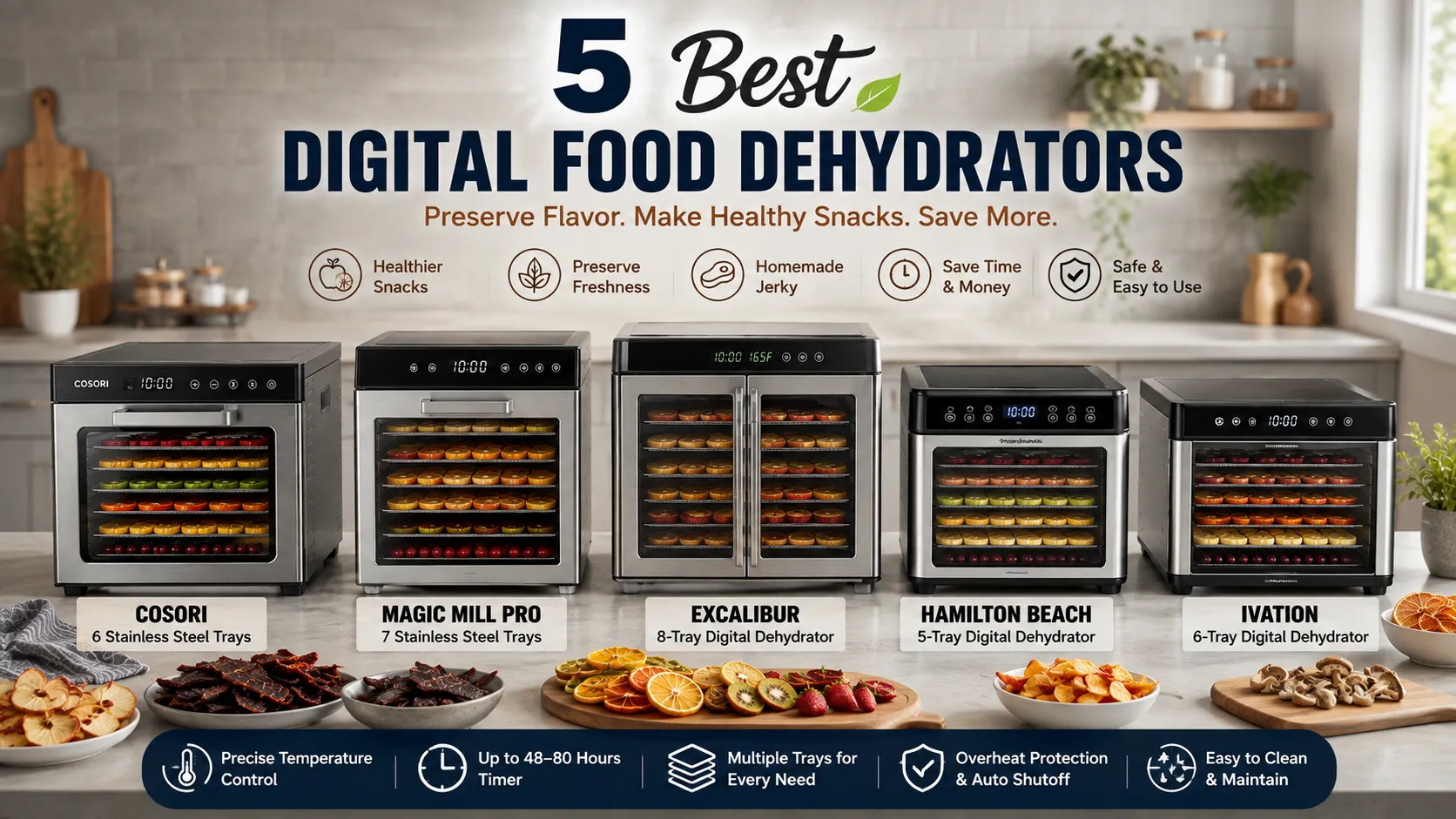
Digital food dehydrators are the most affordable home appliance for easily preserving your fruits, vegetables, herbs and meat. With a digital dehydrator you’ll have increased control of the temperature and drying time, allowing you to make uniform batches of homemade food unlike traditional dehydrating methods. A high-quality food dehydrator is not only limited to dehydrating fruits but can be used for much more. From none to home, you can dry beef jerky, vegetable chips, dried herbs fruit leather and even homemade pet treats. Things like digital temperature controls, automatic shutoff, more racks, and horizontal airflow improve your ease of use.
Digital Food Dehydrator Comparison
Dehydrator Trays Temperature Range Timer Standout Feature Best For COSORI 6 95–165°F Up to 48 hrs Stainless-steel trays Home cooks Magic Mill Pro 7 95–176°F Up to 48 hrs 600W rear fan Large batches Excalibur 8 85–165°F Up to 80 hrs Large drying capacity Serious dehydrating Hamilton Beach 5 100–160°F Up to 48 hrs Compact design Beginners Ivation 6 95–158°F Digital timer Rear-mounted fan Everyday preservation
1. COSORI Food Dehydrator – 6 Stainless Steel Trays
For these home cooks who seek a combination of digital controls, stainless-steel construction and plenty of drying space, the COSORI Food Dehydrator is a solid choice. From the product information, it has six stainless-steel trays and around 6.5 square feet of drying area. Using its digital touch-control panel, you can set the temperature anywhere from 95°F to 165°F and the drying times up to 48 hours.
Key Features
- 6 stainless-steel trays
- 6.5 ft² drying space
- Digital touch controls
- 95–165°F temperature range
- Up to 48-hour timer
- Dishwasher-safe trays
- Mesh screen included
- Fruit-roll sheet included
- Automatic shutoff
- Overheat protection
Pros
- Stainless-steel trays
- Large drying area
- Precise digital controls
- Useful accessories included
- Automatic safety features
- Suitable for fruits, vegetables, herbs, and jerky
Cons
- Takes more counter space than compact dehydrators
- Digital controls may be more than casual users need
- Large batches can require considerable preparation time

Also read:Best Food Drying Appliances and Accessories
2. Magic Mill Pro Food Dehydrator Machine – 7 Stainless Steel Trays
Our Consensus: The Magic Mill Pro is a good option for someone looking for a larger-capacity dehydrator with stainless-steel features inside and out. This model features a 600-watt rear-mounted fan and rear heat system for distributing warm air across the trays. One of the major benefits to this design is you typically do not need to rotate the trays while dehydrating.
Key Features
- 7 full-size stainless-steel trays
- 600W power
- Rear-mounted fan
- 95–176°F temperature range
- 1-degree temperature adjustments
- 48-hour timer
- Automatic shutoff
- Overheat protection
- Keep-warm function
- Mesh screens
- Fruit-roll/drip tray
Pros
- Large seven-tray capacity
- Strong rear airflow system
- Precise temperature adjustments
- Stainless-steel construction
- No regular tray rotation required
- Useful accessories included
Cons
- Larger footprint
- Higher power consumption than some smaller models
- May be excessive for occasional users

Also read: Families, gardeners.
3. Excalibur Food Dehydrator – 8-Tray
If capacity is your main concern, the Excalibur eight-tray dehydrator should definitely be considered. It has an impressive and capable drying area given Digital Food its actual size. 8 Chrome Trays and About 7.2 cubic feet of Drying Space: The model you see in the product detail has eight chrome trays and the total space for drying is about 7.2 cu ft, Its Digital Food horizontal airflow system was made to circulate heat over the trays without rotating specific ones repeatedly.
Key Features
- 8 chrome trays
- 7.2 cu. ft. drying space
- Adjustable 85–165°F temperature
- Up to 80-hour digital timer
- Horizontal airflow
- Even-drying technology
- Clear glass French doors
- Stainless-steel design
Pros
- Excellent capacity
- Long 80-hour timer
- Wide temperature range
- Easy-to-monitor glass doors
- Designed for even drying
- Suitable for large batches
Cons
- Larger appliance
- May cost more than basic dehydrators
- Chrome trays may not appeal to users specifically looking for stainless-steel trays

Best for: Serious home dehydrating, large families, gardeners, and people who preserve food regularly.
4. Hamilton Beach Digital Food Dehydrator – 5 Trays
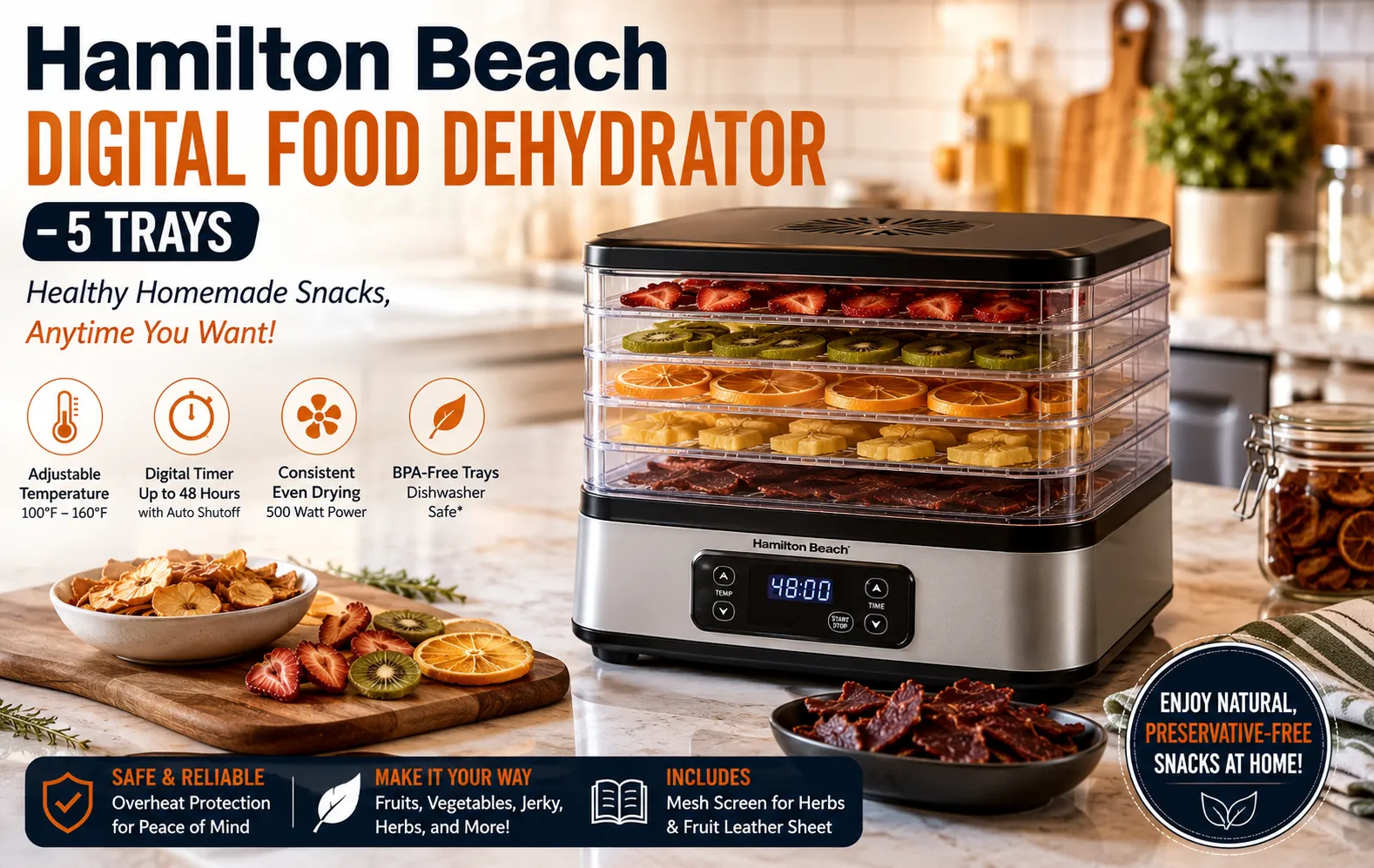
If your goal is simply to have a familiar kitchen-appliance brand and a functional-sized machine, the Hamilton Beach Digital Food Dehydrator would be serviceable. Includes five BPA-free Digital Food stackable trays, offering 4.2 square feet of drying space. The digital controls for temperature range from 100°F–160°F.
Key Features
- 5 BPA-free trays
- 4.2 sq. ft. drying space
- 500W heater
- 100–160°F temperature range
- 48-hour digital timer
- Automatic shutoff
- Mesh screen
- Fruit-leather tray
- Clear vented lid
- Dishwasher-safe trays and lid
Pros
- Compact compared with larger models
- Easy digital controls
- Automatic shutoff
- Useful accessories
- Dishwasher-safe main components
- Good option for beginners
Cons
- Smaller capacity than seven- or eight-tray models
- Temperature range is narrower than some competitors
- Stackable design may be less convenient for certain large foods
Best for: Beginners and households looking for a straightforward dehydrator for everyday snacks.
5. Ivation 6-Tray Food Dehydrator
The Ivation 6-Tray Food Dehydrator is another option that costs a bit more and still has plenty of capacity along with digital control. Six adjustable drying racks of around 13 by 12 inches. The Digital Food rear-mounted fan is designed to support are in the g uniform airflow across the trays, minimizing tray rotation.
Key Features
- 6 adjustable drying racks
- Rear-mounted fan
- Digital thermostat
- 95–158°F temperature range
- Automatic shutoff timer
- Fine-mesh sheet
- Fruit-roll sheet
- Overheating protection
- ETL safety listing
Pros
- Six-tray capacity
- Rear airflow design
- Digital temperature settings
- Accessories included
- Useful for fruits, herbs, vegetables, and jerky
Cons
- Temperature range isn’t as wide as some competitors
- Fewer trays than the largest models
- Its larger footprint may not suit very small kitchens

Best for: Users who want six trays and straightforward digital controls for everyday food preservation.
Final Verdict
The COSORI is a well-rounded choice for home cooks who want stainless-steel trays, digital controls, and useful Digital Food accessories. Magic Mill Pro is better suited to larger batches and users who Digital Foodwant precise temperature adjustments and a powerful rear-fan system.The Excalibur stands out for capacity and its long timer, making it attractive for serious food preservation. Hamilton Beach is a practical choice for beginners who prefer a smaller five-tray machine, while Ivation provides a useful middle ground with six trays and digital controls.
What Can You Make in a Digital Food Dehydrator?
One of the biggest advantages of a food dehydrator is its versatility. You can use one appliance to prepare many homemade foods.
Dried Fruit
Slice apples, bananas, mangoes, strawberries, or other fruits into relatively even pieces. Properly dried fruit makes a convenient snack for home, school, travel, or outdoor activities.
Beef Jerky
A dehydrator can be used to prepare homemade beef jerky. However, meat requires extra attention to food safety. Follow a tested recipe and appropriate USDA food-safety guidance rather than relying only on the dehydrator’s temperature setting.
Vegetable Chips
Thinly sliced vegetables such as zucchini, carrots, and other produce can be dried into crunchy snacks.
Dried Herbs
A digital dehydrator is particularly useful for preserving herbs from a home garden. Low-temperature drying can help remove moisture while retaining much of the herb’s aroma and flavor.
Fruit Leather
Some models include solid fruit-roll sheets that make it easier to prepare homemade fruit leather.
Pet Treats
Certain dehydrators can also be used for homemade pet treats. Always make sure the ingredients are appropriate for the specific animal and avoid ingredients known to be harmful to pets.
How to Choose the Best Digital Food Dehydrator
Before buying a dehydrator, consider how often you will use it.
Capacity: If you regularly dry large amounts of food, choose Digital Food a model with six, seven, or eight trays. For occasional snacks, five trays may be enough.
Temperature control: Precise temperature settings give you greater flexibility when working with different foods.
Timer: A long timer is useful because some foods can require many hours to dry.
Airflow: Rear-mounted fans and horizontal Digital Food airflow systems can help distribute heat more evenly and reduce the need to rotate trays.
Materials: Stainless-steel trays are attractive to buyers looking for durability and easy cleaning, while BPA-free plastic trays can keep the appliance lighter and more affordable.
Cleaning: Dishwasher-safe trays Digital Food can save time, especially if you frequently make sticky fruit leatherDigital FoodDigital Food or marinated foods.
Noise: Since dehydration can take several hours, consider a model with a fan design intended for quieter operation if the appliance will run in your kitchen overnight.
Is It Worth Buying a Food Dehydrator?
Yes, a food dehydrator can be worth buying if you regularly preserve food or enjoy making homemade snacks. It can give you more control over ingredients than many packaged snacks because you can decide what goes into your recipes.
It can be especially useful for gardeners, families, hikers, meal-prep enthusiasts, and people who enjoy making jerky or dried fruit.
However, if you only plan to dehydrate food once or twice a year, a dedicated appliance may not be necessary. In that case, another appliance you already own may Digital Food provide enough functionality.
Can I Use My Air Fryer as a Dehydrator?
Some air fryers have a dedicated dehydrate function, so they can be used for dehydration when the manufacturer specifically supports it.
However, an air fryer and a dedicated dehydrator are designed differently. Food dehydrators generally provide more tray space and are designed for long, low-temperature drying cycles.
An air fryer can be convenient for small batches, while a dedicated digital food dehydrator is usually more suitable if you regularly preserve large amounts of food.
What Is the Price of a Food Dehydrator Machine in Pakistan?
The price of a food dehydrator machine in Pakistan can vary significantly depending on the brand, capacity, construction, features, and whether the product is locally available or imported.
Smaller basic dehydrators are generally less expensive, while larger stainless-steel models with digital controls can cost considerably more. Imported Amazon models may also have additional shipping, taxes, and import costs when purchased from outside Pakistan.
For the most accurate current price, check local Pakistani retailers and the final delivered price of imported products rather than relying on an old price estimate.
Do Dehydrators Take Up a Lot of Electricity?
A food dehydrator does use electricity because it operates a heating element and fan for several hours. However, its electricity consumption depends mainly on the wattage and how long you operate it.
For example, a 500W dehydrator running continuously for 10 hours would theoretically use about 5 kWh of electricity. A 600W model running for the same period would use about 6 kWh.
Actual consumption can be lower or vary depending on cycling of the heating element and operating conditions.
You can estimate the electricity used with this simple formula:
Watts ÷ 1,000 × hours of operation = kWh used
This makes it easier to estimate running costs based on your local electricity rate.
Frequently Asked Questions
What is the best digital food dehydrator for home use?
The best model depends on your needs. COSORI is a strong all-around option, while Hamilton Beach may be better for beginners who want a smaller five-tray machine.
Is a digital dehydrator better than a basic dehydrator?
A digital dehydrator generally offers more precise temperature and timer controls. This can make it easier to repeat recipes and manage long drying cycles.
How long does food take to dehydrate?
Drying time varies according to the food, thickness, moisture content, temperature, and dehydrator design. Fruit and vegetables can take several hours, while some foods may require considerably longer.
Can I dehydrate meat in these machines?
Yes, these types of dehydrators can be used for jerky, but meat requires proper food-safety practices. Use a tested recipe and follow appropriate food-safety recommendations.
Are stainless-steel trays better?
Stainless-steel trays are durable and appealing for people who prefer metal food-contact surfaces. However, BPA-free plastic trays can also be practical and lightweight.
Can I leave a food dehydrator running overnight?
Many digital dehydrators have timers and automatic shutoff features designed to make unattended operation more convenient. Always follow the manufacturer’s instructions and place the appliance on a suitable, stable surface with adequate ventilation.
What foods are easiest to dehydrate?
Fruit, herbs, vegetables, and properly prepared jerky are among the most popular foods to make in a food dehydrator.
Which dehydrator has the most trays?
Among the five models covered here, the Excalibur has eight trays, followed by Magic Mill with seven and COSORI and Ivation with six each. Hamilton Beach has five trays.
Does dehydrating food preserve nutrients?
Dehydrating removes water and can preserve food for longer storage, but heat-sensitive nutrients may be affected during processing. The exact nutritional changes depend on the food and drying conditions.
Is a food dehydrator good for meal prep?
Yes. A dehydrator can help prepare shelf-stable snacks and ingredients in advance, including dried fruit, vegetables, herbs, and jerky.
What Is a Digital Food Dehydrator?
A digital food dehydrator is an electric kitchen appliance that removes moisture from food using controlled heat and airflow. By reducing moisture, it helps extend the storage life of foods while maintaining much of their flavor.
The best digital dehydrators generally allow you to select a specific temperature and drying time. This is particularly helpful because different foods require different drying conditions.
For example, herbs and delicate fruits generally need lower temperatures, while meat for jerky requires appropriate higher-temperature processing followed by proper food-safety handling.
Important features to consider include:
- Digital temperature control
- Adjustable timer
- Number of trays
- Drying-space capacity
- Airflow design
- Stainless-steel or BPA-free trays
- Dishwasher-safe components
- Automatic shutoff
- Overheat protection
- Noise level
- Ease of cleaning





1 Comment
[…] Also read: Digital Food Dehydrator […]