
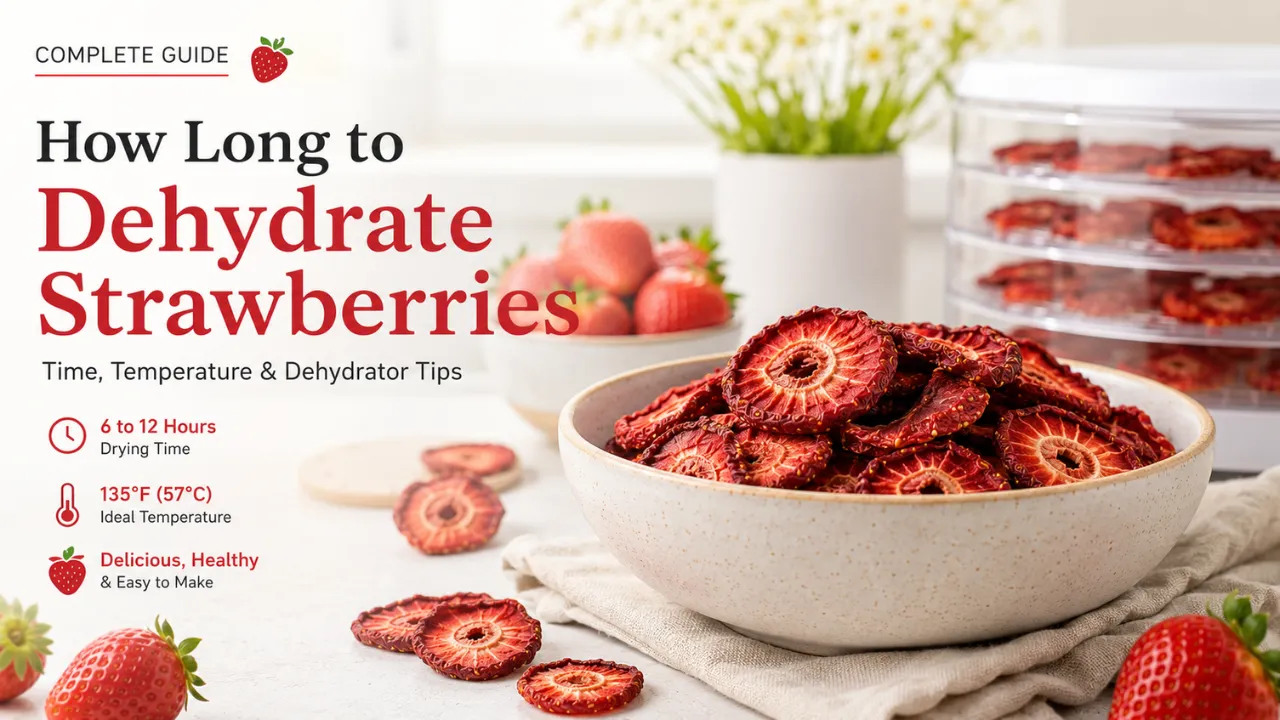
Assuming you have access to a food dehydrator and fresh strawberries, this really is the easiest concentrated snack you will ever need to create! Dehydrated are sweet, storage-friendly and a welcome addition to trail mix, granola, yogurt, desserts… For the most part, sliced berries can require 6-12 hours in a food dehydrator. The drying time varies considerably based on slice thickness, moisture content, type of dehydrator used, airflow and desired crispness or chewiness.
1. COSORI Food Dehydrator Machine
COSORI Food Dehydrator For BeginnersIf you want a versatile and easy way to dry fruits, vegetables, herbs or even food in general, the COSORI is a practical choice. Instead, it offers a tray-style design that will allow you to neatly lay out strawberry slices in a single layer. Good for those who would want a modern appliance but simple controls.
Pros
- Beginner-friendly design
- Useful for fruits and vegetables
- Convenient for strawberry slices
- Easy-to-use controls
- Suitable for everyday home dehydration
Cons
- Requires countertop space
- Multiple trays may take time to clean
- May not be ideal for very large batches

Also read: Beginners and everyday home use.
2. NESCO Snackmaster Pro Food Dehydrat
The NESCO Snackmaster Pro Food Dehydrator is a home food dehydrator that can be used for fruits, vegetables, herbs and snacks. Its expandable tray design makes it a desirable choice if you later need more capacity. It is best for those who want a simple dehydrator and not some complicated piece of equipment.
Pros
- Good for fruit dehydration
- Expandable tray capacity
- Simple operation
- Useful for beginners
- Suitable for different types of food
Cons
- Less modern-looking than some digital models
- Additional trays can increase the size
- Requires attention to temperature settings

Also read: Best Food Dehydrators for Dehydrating Strawberries.
3. Excalibur 9-Tray Food Dehydrator
The next one, Excalibur 9-Tray Food Dehydrator is another model which I would say is for those who want a bit more area to dry. Having 5 total trays is great if you are processing a lot of strawberries or foods at once. However, that can makes sense for heavy users and those who want to prepare larger batches and save time instead of making several small runs.
Pros
- Large drying capacity
- Good for bigger batches
- Useful for fruits and vegetables
- Suitable for frequent dehydration
- Plenty of tray space
Cons
- Takes more countertop space
- Usually costs more than basic models
- May be more than a beginner needs

Best For: Frequent users and larger batches.
4. Magic Mill Food Dehydrator
You need a larger-capacity home food dehydrator? The Magic Mill Food Dehydrator is also among your option. For fruits, vegetables, herbs and other foods. If you cook a lot of batches, its larger tray setup can be useful. Having extra drying space helps to speed up processing of greater quantities of fruit during strawberry season.
Pros
- Large drying capacity
- Useful for different foods
- Good for frequent dehydration
- Suitable for fruit and vegetables
- Helpful for larger batches
Cons
- Requires additional storage space
- Larger machines can take longer to clean
- May be unnecessary for occasional users

Best For: Families and frequent home dehydrators.
5. Elite Gourmet Food Dehydrator
Elite Gourmet Food Dehydrator: A basic solution for anyone trying out food dehydrating for the first time but not ready to invest in a bulky machine yet. It is quite good for small quantities of strawberries, bananas, apples, herbs and foods. It is designed simply to be a reasonable launching pad for newcomers.
Pros
- Beginner-friendly
- Compact compared with larger models
- Useful for small fruit batches
- Simple to operate
- Good for occasional use
Cons
- Smaller capacity
- Large quantities may require multiple batches
- Basic models may have fewer advanced controls

Best For: Beginners and occasional users.
Final Thoughts
Let us now get into how long to dehydrate strawberries. It can take anywhere from 6 to 12 hours for it to dry evenly with plenty of batches of strawberries. But drying time varies from batch to batch. Factors, including slice thickness and moisture content of the fruit, airflow in your dehydrator, temperature, and end product texture can all have an impact on the final outcome. To guarantee a consistent batch of jerky, begin with clean wash and dry thoroughly; trim the stems away then slice evenly. Place the slices onto one single layer and dehydrate with your machine with an appropriate fruit-dehydrating temperature.
How to Choose the Right Food Dehydrator
Before buying a dehydrator, consider how often you plan to use it.
Tray Capacity
If you only dry small amounts of fruit, a compact model may be enough.
For large strawberry batches, a dehydrator with more trays can save time.
Temperature Control
Look for a model that allows you to adjust the temperature according to the food you are drying.
Airflow
Good airflow is important because moisture needs to escape from the fruit during dehydration.
Ease of Cleaning
Removable trays and easy-to-clean surfaces can make regular use more convenient.
Countertop Space
Large dehydrators can take up considerable space, so measure your available area before buying.
Common Mistakes When Dehydrating Strawberries
Cutting Slices Too Thick
Thick slices take longer to dry.
Try to keep the pieces similar in size and thickness.
Overlapping the Strawberries
Overlapping can reduce airflow and increase drying time.
Always spread the slices into a single layer.
Storing Strawberries While Warm
Do not immediately seal warm inside a container.
Allow them to cool completely first.
Relying Only on the Timer
A timer is useful, but every batch is different.
Use texture as the final indicator of doneness.
Overcrowding the Trays
Too much fruit can restrict airflow.
Give the slices enough room for air to circulate.
What Can You Do With Dehydrated Strawberries?
Dehydrated strawberries are more versatile than they may seem.
Eat Them as a Snack
They can be eaten directly as a sweet dried-fruit snack.
Add Them to Yogurt
Break them into smaller pieces and add them to yogurt.
Use Them in Granola
Dried pieces can add flavor and texture to homemade granola.
Add Them to Trail Mix
Combine dried with other dried fruit, nuts, and seeds.
Use Them as a Dessert Topping
Crispy strawberry pieces can be crushed and used as a topping.
Add Them to Baking
Chopped dried strawberries can be useful in some cookies, muffins, and other baked recipes.
Frequently Asked Questions
How long to dehydrate strawberries at 135°F?
Sliced commonly take around 6 to 12 hours at approximately 135°F, but the actual time can vary depending on slice thickness, moisture, airflow, and your dehydrator.
Can you dehydrate strawberries without sugar?
Yes. Fresh contain natural sugar, so no additional sugar is required for basic dehydration.
Can you dehydrate whole strawberries?
Yes, but whole contain more moisture and generally take much longer to dry evenly. Slicing them usually produces more consistent results.
How thick should strawberry slices be?
Around 1/4 inch is a useful starting point. Keeping the slices similar in thickness helps them dry at a more consistent rate.
Should dehydrated strawberries be crunchy?
Not necessarily. They can be chewy, leathery, or crispy depending on drying time and slice thickness.
Can I dehydrate frozen strawberries?
Frozen strawberries can be dehydrated after thawing, but their texture may differ from fresh strawberries because freezing changes the fruit’s structure.
How should I store dehydrated strawberries?
Cool them completely and place them in an airtight container. Store the container in a cool, dry, dark location and protect the fruit from humidity.
Can I use an oven instead of a dehydrator?
An oven can be used for drying fruit, but a food dehydrator is specifically designed for controlled drying with airflow. A dehydrator may be more convenient if you regularly preserve fruit.
What is the best dehydrator for strawberries?
The best choice depends on your needs. A compact model can work well for beginners and small batches, while a larger multi-tray dehydrator is more suitable for frequent or high-volume dehydration.
Quick Answer: How Long to Dehydrate Strawberries?
For most sliced expect approximately 6 to 12 hours of drying time.
A commonly used temperature for fruit dehydration is around 135°F (57°C), although you should always follow the temperature recommendations provided with your specific dehydrator.
The final texture depends on how long you leave the strawberries in the machine.
- Shorter drying time: Softer and chewier
- Longer drying time: Firmer and crispier
- Thicker slices: Take longer
- Thin slices: Usually dry faster
The best way to determine whether your strawberries are ready is to check their texture after they have cooled.
What Temperature Is Best for Dehydrating Strawberries?
A temperature of around 135°F (57°C) is commonly used for dehydrating fruit.
A consistent temperature allows moisture to gradually leave the strawberries while the fruit dries.
Your particular dehydrator may have different settings or recommendations, so check the manufacturer’s instructions before starting.
Avoid relying only on temperature and time. Airflow is also important because the moving air helps carry moisture away from the fruit.
How to Prepare Strawberries for Dehydrating
Proper preparation can make your strawberry slices dry more evenly.
1. Choose Fresh Strawberries
Start with fresh that are in good condition.
Avoid showing mold or significant spoilage. Very soft strawberries can also be difficult to slice evenly.
Choose berries with good color and a texture that allows you to cut consistent slices.
2. Wash the Strawberries
Rinse the strawberries thoroughly under clean running water.
After washing them, gently pat them dry with a clean towel.
Removing excess water from the surface can help the dehydration process begin more efficiently.
3. Remove the Stems
Remove the green leafy tops and any damaged portions.
A small knife or strawberry huller can make this step easier.
4. Slice the Strawberries Evenly
Cut the into slices of similar thickness.
Around 1/4 inch is a useful starting point for many dehydrators.
Try to keep the slices consistent because thin pieces can finish much earlier than thick pieces.
5. Arrange the Slices on the Trays
Place the strawberry slices in a single layer.
Do not pile them on top of each other or allow them to overlap heavily.
Good airflow around the fruit helps moisture escape more effectively.
How to Dehydrate Strawberries Step by Step
Once your are prepared, the actual process is simple.
Step 1: Prepare Your Dehydrator
Clean the trays and make sure the dehydrator is ready for use.
If your model recommends preheating, preheat it according to the manufacturer’s instructions.
Step 2: Place Strawberries on the Trays
Arrange the strawberry slices in a single layer.
Leave some space between pieces whenever possible.
Step 3: Set the Temperature
Set the dehydrator to the recommended fruit-drying temperature for your machine. Around 135°F (57°C) is a commonly used setting.
Step 4: Start the Dehydration Process
Put the trays into the dehydrator and begin drying.
As the process continues, the will shrink and lose moisture.
Step 5: Check the Strawberries
Start checking the as they approach the expected drying time.
Some pieces may finish earlier than others, especially if they are different thicknesses.
You can remove finished pieces while allowing thicker ones to continue drying.
Step 6: Let Them Cool
Once the strawberries appear finished, remove them from the dehydrator and let them cool.
Do not judge the final texture while they are still hot.
Cooling allows you to get a better idea of their final consistency.
How Do You Know When Dehydrated Strawberries Are Done?
The texture is more important than a specific number of hours.
Properly dehydrated strawberries should feel dry rather than wet.
Depending on your preference, they can be:
- Soft and leathery
- Chewy
- Firm
- Crisp
Take one slice out and allow it to cool for several minutes.
If it still feels wet or has noticeable moisture inside, continue dehydrating it.
If you want crispy strawberry chips, allow the slices to dry longer until they reach the desired crispness.
Why Are My Dehydrated Strawberries Still Soft?
There are several reasons strawberries may remain soft.
Thick Slices
Thicker strawberry slices contain more moisture and naturally require more time.
Juicy Strawberries
Some s have a higher water content than others.
Poor Airflow
If trays are overcrowded or slices overlap, air may not circulate properly.
Insufficient Drying Time
The strawberries may simply need more time in the dehydrator.
Normal Chewiness
Remember that dehydrated strawberries do not have to be completely crunchy. A leathery or chewy texture can be perfectly normal if that is what you prefer.
How to Make Crispy Strawberry Chips
If you want crispy dehydrated strawberries, use relatively thin and evenly sized slices.
Arrange them without overlapping and continue drying until they become firm.
Because strawberries contain natural sugars, they may become quite flavorful and concentrated as moisture is removed.
Always allow the finished chips to cool before deciding whether they are crispy enough.
Do You Need Sugar to Dehydrate Strawberries?
No.
You can dehydrate strawberries without adding sugar.
Fresh strawberries already contain natural sugars, and those sugars become more concentrated as water is removed.
Plain dehydrated strawberries are therefore a simple option when you want to preserve the natural strawberry flavor.
How to Store Dehydrated Strawberries
Proper storage helps protect dried strawberries from moisture.
First, allow the strawberries to cool completely.
Then place them in a clean, airtight container.
Good storage options include:
- Airtight glass jars
- Food-storage containers
- Resealable food-storage bags
Keep the container in a cool, dry, dark location.
Avoid exposing the strawberries to unnecessary humidity because dried fruit can absorb moisture from the surrounding air.
For longer-term food preservation, follow appropriate food-safety and storage guidance for your specific situation.